Welcome to Africa Cycads
|
Cycad Trivia Encephalartos ghellinckii (Drakensberg cycad) was named for Édouard de Ghellinck de Walle, the 19th- Century Ghent plant collector, horticulturist and amateur botanist who first cultivated it in Europe.  |
||
New Cycad Arrivals: | ||
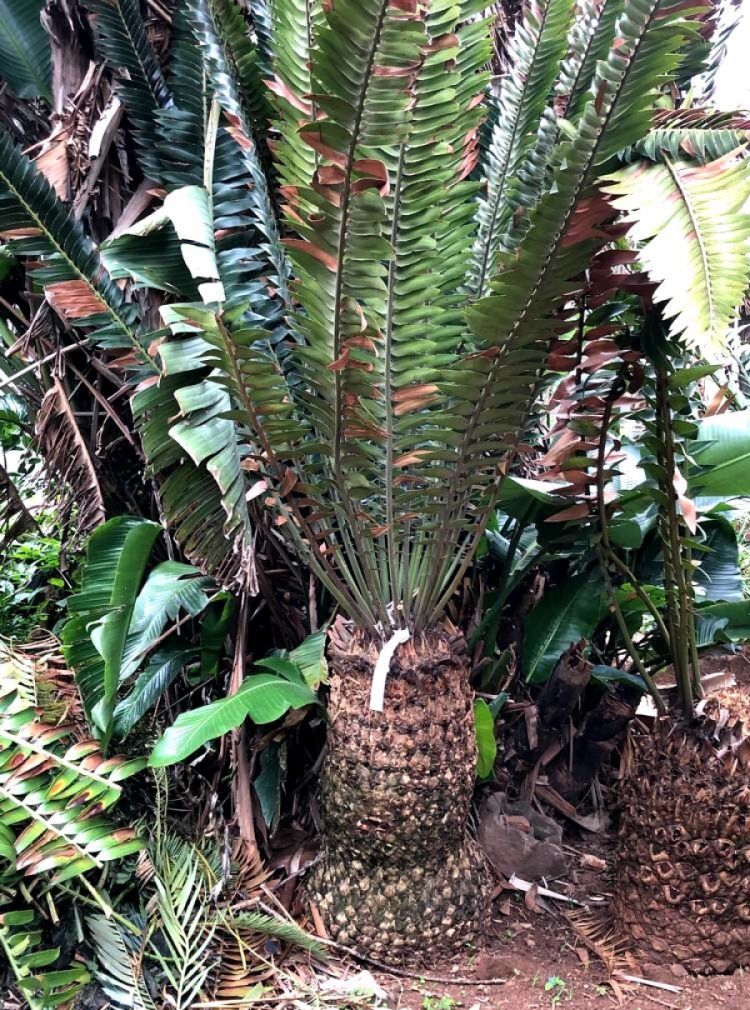
Modjadji Cycad View Details E. transvenosus Price: R 7,000.00 nmd | 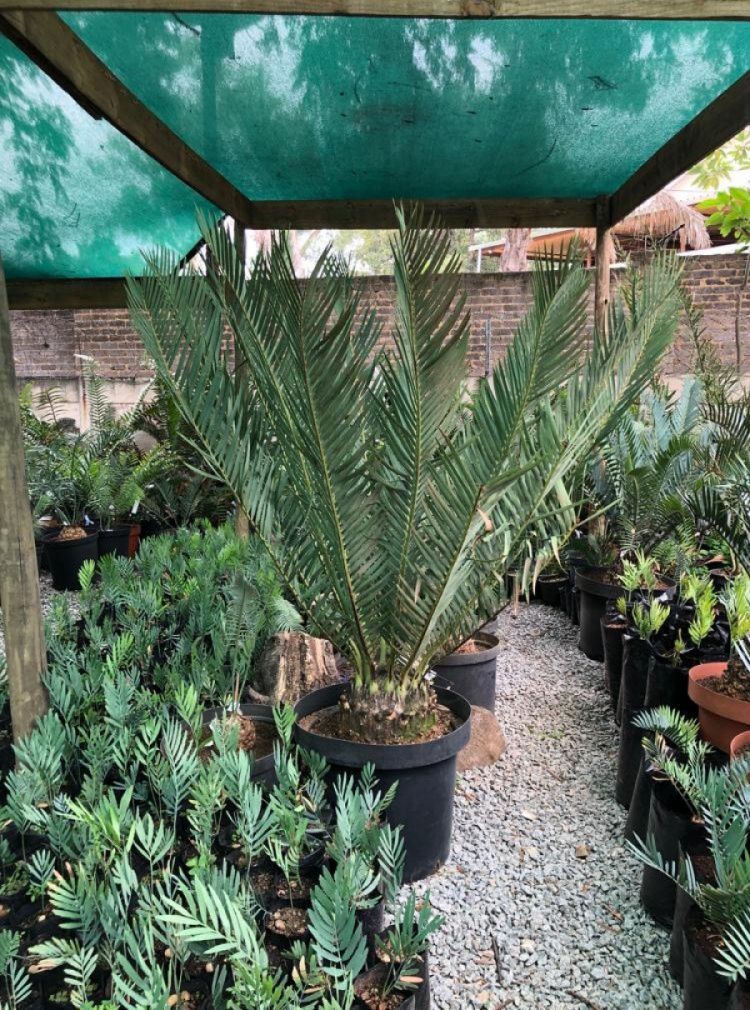
Lillie Cycad View Details E. dyerianus Price: R 15,000.00 Potted | 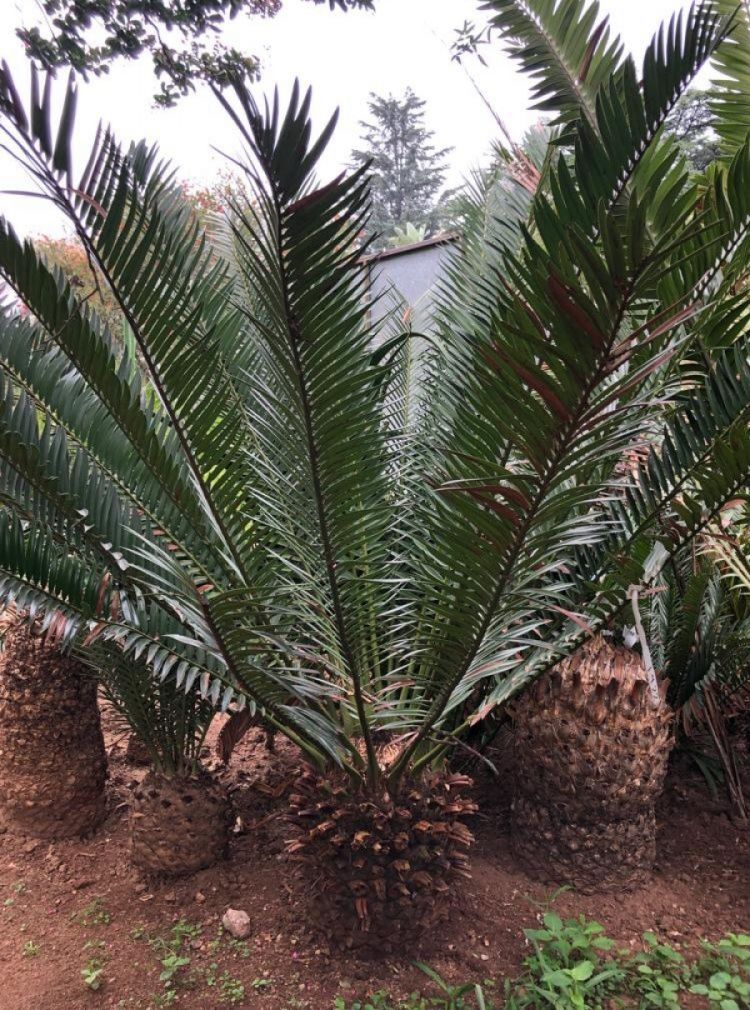
Eastern Cape Giant Cycad View Details E. altensteinii Price: R 3,500.00 nmd |
 Encephalartos hirsutus is a species of cycad that is native to Limpopo Province, South Africa. It was recorded from three separate localities on south-east-facing quartzite cliffs in the Makuya Nature Reserve bordering the Kruger National Park at altitudes ranging from 800 to 1 000 m.
The trunks of Encephalartos hirsutus are decumbent and up to 3.5m or rarely 4.2m long. It is 350mm to 400mm in diameter with persistent leaf bases with a golden, densely tomentose (hairy) crown, turning greyish with age.
The numerous leaves are arranged in a dense crown, glaucous, subsessile and rigid with recurved apices. They are 1.1m to 1.2m (-1.4m) long. The petiole is... Encephalartos hirsutus is a species of cycad that is native to Limpopo Province, South Africa. It was recorded from three separate localities on south-east-facing quartzite cliffs in the Makuya Nature Reserve bordering the Kruger National Park at altitudes ranging from 800 to 1 000 m.
The trunks of Encephalartos hirsutus are decumbent and up to 3.5m or rarely 4.2m long. It is 350mm to 400mm in diameter with persistent leaf bases with a golden, densely tomentose (hairy) crown, turning greyish with age.
The numerous leaves are arranged in a dense crown, glaucous, subsessile and rigid with recurved apices. They are 1.1m to 1.2m (-1.4m) long. The petiole is... |